
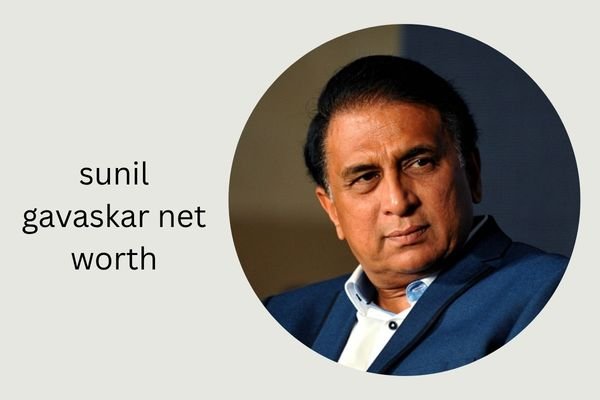
Sunil Gavaskar, fondly called the “Little Master,” remains one of the most respected names in world cricket even decades after his retirement. Fans searching for sunil gavaskar net worth want to know exactly how the legendary opener has built his fortune since hanging up his bat in 1987.
As of 2026, various celebrity-finance trackers put Sunil Gavaskar’s net worth in rupees at roughly ₹250–263 crore (approximately $30–32 million), a figure built from decades of cricket earnings, commentary fees, IPL contracts, and business investments. It’s worth stressing upfront that Gavaskar has never publicly confirmed his own net worth — every number below comes from third-party financial trackers and media estimates rather than an official disclosure, so treat the sunil gavaskar net worth figure as an informed estimate rather than a verified fact.
Quick Facts Summary
| Field | Details |
|---|---|
| Full Name | Sunil Manohar Gavaskar |
| Nickname | Sunny, Little Master |
| Date of Birth | 10 July 1949 |
| Age (2026) | 77 |
| Birthplace | Bombay (now Mumbai), Maharashtra, India |
| Nationality | Indian |
| Zodiac Sign | Cancer |
| Religion | Hinduism |
| Marital Status | Married (to Marshneil Gavaskar since 1974) |
| Children | One son, Rohan Gavaskar |
| Known For | First batsman to 10,000 Test runs; legendary opening batter |
| Net Worth | Estimated ₹250–263 crore (~$30–32 million) |
Personal Information
Several “celebrity facts” sites list detailed physical descriptors — eye colour, hair colour, exact complexion, “distinguishing features,” and so on — for public figures like Gavaskar, but these specifics are rarely confirmed by any credible source and are typically guesswork dressed up as fact. In the interest of accuracy, this article sticks to what is genuinely documented.
| Attribute | Detail |
|---|---|
| Full Legal Name | Sunil Manohar Gavaskar |
| Title/Honours | Padma Bhushan, Arjuna Award |
| Height | 5 ft 4 in (163 cm), per Wikipedia’s infobox (some entertainment sites list 5 ft 5 in) |
| Batting Style | Right-handed |
| Bowling Style | Right-arm medium |
| Playing Role | Opening batsman |
| Other appearance details (eye colour, hair colour, complexion, voice, dress style) | Not reliably documented in verified sources — best avoided rather than guessed |
Family & Personal Life Background
Family Heritage & Ancestry
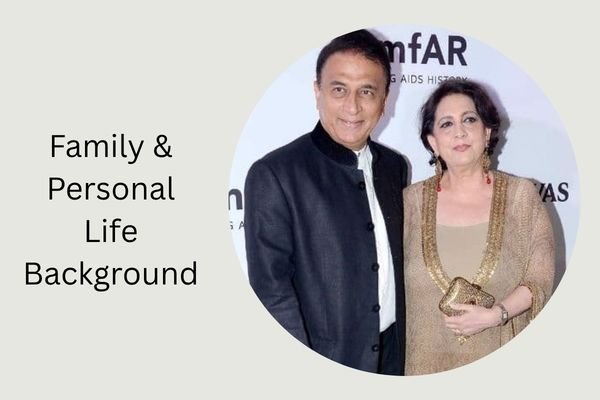
Gavaskar comes from a middle-class, cricket-loving Marathi family in Mumbai, and cricket runs through several branches of his family tree.
| Relation | Name | Notes |
|---|---|---|
| Father | Manohar Gavaskar | A club-level cricketer himself; passed away in May 2012 at age 88 |
| Mother | Meenal Gavaskar | Passed away in December 2022 at age 95 |
| Uncle | Madhav Mantri | Former Indian Test wicketkeeper |
| Sister | Kavita Viswanath | Married to former India batter Gundappa Viswanath |
| Sister | Nutan Gavaskar | Former honorary general secretary, Women’s Cricket Association of India |
| Wife | Marshneil Gavaskar | From Kanpur; married Sunil on 23 September 1974 |
| Son | Rohan Gavaskar | Former India ODI cricketer, later a commentator |
| Daughter-in-law | Swati Gavaskar | Married to Rohan |
| Grandchildren | Reha and Vivaan | Rohan and Swati’s children |
Gavaskar and Marshneil met when she asked him for an autograph at a match in 1973; the couple married the following year and had one son, Rohan, born in 1976 — several older aggregator sites list a second, oddly named “child,” which appears to be a garbled reference to Marshneil’s hometown of Kanpur rather than an actual child, and is not supported by verified biographical sources.
Personal Life Philosophy
Gavaskar has often spoken about the discipline instilled in him early — batting for hours without a helmet against the fastest bowlers of his era, including the fearsome West Indies pace attack of the 1970s and 80s. That same discipline appears to have carried into his post-cricket life, where he has built a long, steady second career in commentary, administration, and business rather than chasing quick money.
He has also been candid, in interviews over the years, about the trade-off between a demanding cricket and commentary career and time spent with family — noting that his own parents and in-laws effectively raised his son Rohan while he and Marshneil were constantly travelling for cricket. That reflective, understated tone — acknowledging both the rewards and the costs of a high-profile career — is a recurring theme whenever Gavaskar discusses his life outside the record books.
Educational Journey
Schools & Early Education
| Level | Institution | Location | Years (approx.) | Achievement |
|---|---|---|---|---|
| School | St. Xavier’s High School | Mumbai | 1950s–1966 | Named India’s Best Schoolboy Cricketer, 1966 |
College Education
| Institution | Course | Years (approx.) | Notes |
|---|---|---|---|
| St. Xavier’s College | Undergraduate studies | Late 1960s | Continued developing as a cricketer through college-level and university cricket in Mumbai |
Detailed academic transcripts, specific degree titles, and precise graduation dates are not part of the public record for Gavaskar, which is typical for cricketers of his generation whose school and college years are documented mainly through cricket milestones rather than academic ones.
Career Timeline
Gavaskar’s professional path splits neatly into two acts: seventeen years as a player, followed by a second, even longer act as a broadcaster and administrator.
| Year | Age | Position/Event | Key Achievement |
|---|---|---|---|
| 1966 | 17 | Schoolboy cricketer | Named India’s Best Schoolboy Cricketer |
| 1971 | 21 | Test debutant vs West Indies | Scored 774 runs in his debut series — still a record for a series debut |
| 1974 | 25 | Married Marshneil | — |
| 1975 | 26 | International cricketer | Received the Arjuna Award |
| 1978 | 29 | Batsman | Surpassed Don Bradman’s tally of 29 Test centuries |
| 1980 | 31 | Wisden Cricketer of the Year | Also awarded the Padma Bhushan |
| 1983 | 34 | India squad member | Part of India’s 1983 Cricket World Cup-winning team |
| 1984–85 | 35 | Captain | Led India to the World Championship of Cricket title |
| 1987 | 38 | First batsman to 10,000 Test runs | Retired with 10,122 Test runs from 125 Tests |
| 1995–96 | 46 | Sheriff of Mumbai | Ceremonial civic post |
| 2008–2016 | 59–67 | ICC Cricket Committee | Served as chairman for several years after being a delegate |
| 2012 | 63 | BCCI honour | Awarded the C.K. Nayudu Lifetime Achievement Award |
| 2009 | 60 | ICC Cricket Hall of Fame | Inducted as one of the game’s all-time greats |
| 2008–present | 59–77 | Commentator | Established as one of cricket’s most recognisable broadcast voices, including through the IPL |
Playing Career Highlights
- First batsman in Test history to score 10,000 runs
- 34 Test centuries — a world record that stood for almost two decades
- 10,122 Test runs at an average of 51.12 across 125 Tests
- Renowned for batting without a helmet against the West Indies pace attack of the 1970s–80s
- Captained India, including the side that won the 1984-85 World Championship of Cricket
Post-Retirement Career Highlights
- Became a leading TV commentator, regularly featured on India’s biggest broadcasts including IPL coverage
- Chaired the ICC Cricket Committee for eight years, after six years as a committee delegate
- Chaired the BCCI’s Technical Committee
- Briefly served as interim BCCI administrator in 2014 amid the IPL spot-fixing controversy
- Continues to be one of the most sought-after voices in cricket commentary and analysis
Major Achievements & Awards

| Year | Award | Organisation | Significance |
|---|---|---|---|
| 1971 | Indian Cricket Cricketer of the Year | Indian Cricket magazine | Recognised his record-breaking Test debut series |
| 1975 | Arjuna Award | Government of India | India’s top sporting honour |
| 1980 | Wisden Cricketer of the Year | Wisden Cricketers’ Almanack | One of cricket’s oldest individual honours |
| 1980 | Padma Bhushan | Government of India | Third-highest Indian civilian award |
| 2009 | ICC Cricket Hall of Fame | International Cricket Council | Lifetime recognition among the game’s greatest |
| 2012 | C.K. Nayudu Lifetime Achievement Award | BCCI | The BCCI’s highest honour for a former player |
Net Worth Without Charity
Some finance-tracking sites also try to estimate a “net worth without charity” figure — essentially, wealth minus any donated or gifted amounts. No verified, itemised record of Gavaskar’s charitable giving exists publicly, so any such adjusted figure would be speculative on top of an already-estimated number. What can be said with more confidence is that his income streams are diversified: broadcasting fees (reportedly the largest single contributor), IPL commentary contracts, brand endorsements, and a handful of business investments, rather than playing-days match fees, which were modest by today’s standards during his 1971–1987 career.
Investment Philosophy & Financial Principles
Based on his publicly reported holdings and comments over the years, a few themes stand out in how Gavaskar has approached money after cricket:
- Diversifying income across commentary, endorsements, and equity stakes rather than relying on a single source
- Investing in real estate, including a Mumbai residence and a holiday villa in Goa, alongside a Dubai property tied to a UAE-based developer
- Taking minority stakes in smaller ventures — reports cite holdings in companies such as Samco Ventures and a board-game company, Binca Games
- Favouring long-term, stable assets over speculative or high-risk bets, consistent with the disciplined image he built as a batsman
Administrative Positions & Organisational Leadership
| Period | Position | Organisation |
|---|---|---|
| 1995–1996 | Sheriff of Mumbai | Municipal Corporation of Greater Mumbai |
| — | Chairman | BCCI Technical Committee |
| ~2008–2016 | Chairman | ICC Cricket Committee |
| 2014 | Interim administrator | BCCI (during the IPL governance crisis) |
Career Philosophy
Across interviews spanning his playing and commentary careers, several consistent pillars emerge in how Gavaskar has talked about his approach to cricket and public life, rather than any single quotable catchphrase:
- Technical discipline — a batting method built on patience and correctness against fast bowling, developed without the protective helmets modern batters use
- Respect for the traditions of the game, particularly Test cricket, even as he embraced newer formats like the IPL as a broadcaster
- Plain-spoken honesty as a commentator, willing to criticise current players when he feels performances fall short
- Institutional service, taking on unpaid or low-profile administrative roles such as the ICC Cricket Committee chairmanship for years at a stretch
- Longevity through adaptability — moving smoothly from playing to broadcasting to administration over nearly five decades in the public eye
Mentorship Style
| Trait | How It Shows Up |
|---|---|
| Direct feedback | Known for blunt, sometimes controversial critiques of current players as a commentator |
| Technical focus | Frequently breaks down batting technique in his analysis |
| Institutional mentoring | Long service on ICC and BCCI committees shaping rules and structures for the next generation |
Recent Developments (Last 1–2 Years)
| Position | Organisation | Status | Focus Area |
|---|---|---|---|
| Cricket Commentator | Star Sports / broadcast networks | Active | IPL and international cricket coverage |
| Columnist/Analyst | Various print and digital outlets | Active | Cricket opinion and analysis |
| Investor | Samco Ventures, Binca Games, Dubai real estate | Active (reported) | Diversified personal investments |
Gavaskar, who turned 77 in July 2026, remains a regular fixture on Indian cricket broadcasts and continues to be quoted widely in cricket media — though, as with the fake viral quote about the BCCI that circulated after a 2023 Asia Cup match and was later debunked by fact-checkers, not everything attributed to him online is accurate, and his son Rohan has had to publicly correct at least one such misquote.
Detailed Biography
Early Life
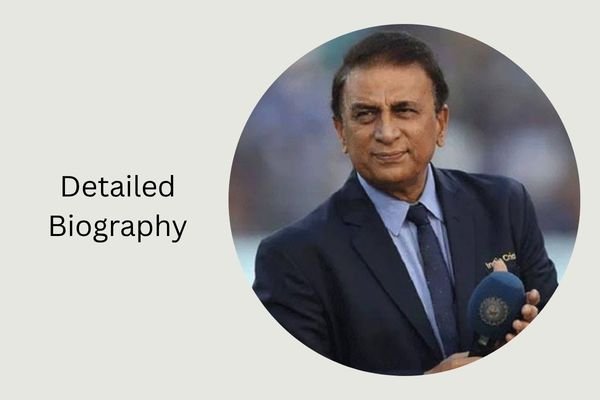
Sunil Manohar Gavaskar was born on 10 July 1949 in Bombay (now Mumbai) into a middle-class Marathi family. His father, Manohar, was a capable club cricketer, and his uncle, Madhav Mantri, had played Test cricket for India as a wicketkeeper — giving young Sunil an early, close connection to the game.
Education
He attended St. Xavier’s High School in Mumbai, where he was named India’s Best Schoolboy Cricketer in 1966, before continuing his studies at St. Xavier’s College while building his reputation in Mumbai’s strong domestic cricket circuit.
Career Milestones
Gavaskar made his Test debut against West Indies in March 1971 and immediately announced himself with 774 runs in that series — a record for a debut Test series that still stands. Over 125 Tests he amassed 10,122 runs, becoming the first batsman in history to reach that milestone, with 34 centuries that stood as the world record for nearly two decades. He was part of India’s 1983 World Cup-winning squad and later captained the side to victory in the 1984-85 World Championship of Cricket.
Landmark “Projects” (Post-Retirement Ventures)
After retiring in 1987, Gavaskar transitioned into commentary and cricket administration — chairing the ICC Cricket Committee for eight years, leading the BCCI’s Technical Committee, and briefly stepping in as an interim BCCI administrator during a governance crisis in 2014. He also built a diversified set of personal investments, from Mumbai and Goa real estate to a Dubai property venture and minority stakes in a couple of smaller companies.
Recent Developments
In his late 70s, Gavaskar remains active as a television commentator and columnist, a role he has now held for nearly as long as his playing career itself.
Lessons & Inspiration
Gavaskar’s story is often cited as a case study in longevity: a career built first on technical mastery against the most dangerous bowling attacks of his generation, and then reinvented, without ever really pausing, into nearly four decades of broadcasting and administrative influence over the sport.
Conclusion
Whatever the precise number behind sunil gavaskar net worth turns out to be, it only tells part of the story. Gavaskar’s real legacy sits in the record books — the first man to 10,000 Test runs, one of the boldest players ever to face fast bowling without a helmet — and in the decades of institutional service and broadcasting that followed. The wealth is a by-product of a career built on discipline and reinvention, not the headline achievement itself.
Frequently Asked Questions
What is Sunil Gavaskar’s net worth in rupees?
Estimates from celebrity-finance trackers put it at roughly ₹250–263 crore (about $30–32 million) as of 2026, though this figure is not officially confirmed by Gavaskar himself.
What would Sunil Gavaskar’s net worth without charity look like?
There’s no public, itemised record of his charitable donations, so a reliable “net worth without charity” figure can’t be calculated — any such number circulating online is speculative.
Is Sunil Gavaskar married?
Yes, he has been married to Marshneil Gavaskar since 1974.
What is Sunil Gavaskar’s current role?
He works primarily as a cricket commentator and analyst on major broadcasts, including IPL coverage, alongside occasional columnist work.
What are Sunil Gavaskar’s major achievements?
He was the first batsman to score 10,000 Test runs, held the Test centuries record with 34 hundreds for nearly two decades, won the 1983 World Cup with India, and received the Arjuna Award, Padma Bhushan, and the BCCI’s C.K. Nayudu Lifetime Achievement Award.
How long did Sunil Gavaskar chair the ICC Cricket Committee?
Around eight years as chairman, following six years as a committee delegate, before stepping down in the mid-2010s to focus on his commentary commitments.
What was Sunil Gavaskar’s educational background?
He attended St. Xavier’s High School and St. Xavier’s College in Mumbai; detailed academic records beyond that aren’t publicly documented.
What are Sunil Gavaskar’s hobbies and interests?
Reports mention interests including watching wrestling, playing badminton, reading, and music, along with a long-standing love of Western classical actors like Paul Newman.
What is Sunil Gavaskar’s philosophy on wealth?
He hasn’t articulated a single public “philosophy of wealth,” but his reported investment choices — real estate, small equity stakes, diversified income streams — suggest a preference for steady, long-term assets over speculative bets.
10. Does Sunil Gavaskar donate to charity?
Specific, verified figures on his charitable giving aren’t publicly available, so this can’t be quantified accurately.
Who are Sunil Gavaskar’s children?
He has one son, Rohan Gavaskar, a former India ODI cricketer and now a commentator himself.
What religion does Sunil Gavaskar follow?
He is reported as Hindu, per publicly available biographical sources.
Disclaimer: This article is compiled from publicly available media reports, celebrity-finance trackers, and biographical sources for general informational purposes only. Net worth figures are third-party estimates, not official disclosures by Sunil Gavaskar or his representatives, and actual figures may differ. Some personal details commonly requested in biography templates (such as precise physical descriptors) are not reliably documented in credible sources and have been omitted rather than guessed. Readers should treat all financial figures as approximate and verify independently before relying on them for any purpose.
