
mamata banerjee net worth
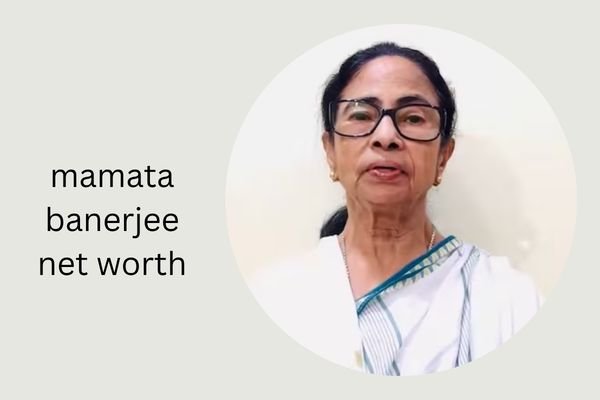
Mamata Banerjee, the Chief Minister of West Bengal and founder of the All India Trinamool Congress (TMC), is one of the most recognisable faces in Indian politics — and, unusually for a leader of her stature, one of the least wealthy. As of her 2026 election affidavit, Mamata Banerjee’s net worth stands at approximately ₹15.4 lakh (roughly $18,000–18,500 USD), a figure that has actually declined slightly over the past five years.
Anyone searching for Mamata Banerjee net worth information will find a consistent pattern across her career: modest declared assets, no property, no vehicle, and an income built mainly from book royalties, paintings, and bank interest rather than business or investment wealth. This article covers her net worth, age, family life, education, and full political career in detail.
Quick Facts Summary
| Field | Details |
|---|---|
| Full Name | Mamata Banerjee |
| Nickname | Didi (“elder sister”) |
| Date of Birth | January 5, 1955 |
| Age (2026) | 71 |
| Birthplace | Kolkata (Calcutta), West Bengal, India |
| Nationality | Indian |
| Zodiac Sign | Capricorn |
| Religion | Hinduism |
| Marital Status | Unmarried |
| Children | None |
| Known For | Chief Minister of West Bengal; founder of All India Trinamool Congress |
| Net Worth (2026) | Approx. ₹15.4 lakh (~$18,500) |
Personal Information
Mamata Banerjee’s public image is as well documented as her politics — she’s known for a consistently simple personal presentation rather than any curated “celebrity” look. A few verified, widely reported details:
| Attribute | Details |
|---|---|
| Full Legal Name | Mamata Banerjee |
| Current Title | Chief Minister of West Bengal |
| Signature Style | Plain white cotton sarees with a coloured border, rubber/Hawaii sandals |
| Public Persona | Austere, direct, known for extensive public interaction and walking rallies |
| Other Pursuits | Poet, author, and painter — she has published poetry collections and sells her paintings, which contribute to her declared income |
Note: precise physical statistics (height, weight, eye colour, hair colour, etc.) are not part of any verified public record for Mamata Banerjee, so rather than invent figures, this article focuses on documented facts about her life and career.
Family & Personal Life Background
Family Heritage
| Relation | Details |
|---|---|
| Father | Promileswar Banerjee — a freedom fighter who was active in India’s independence movement; he died when Mamata was young |
| Mother | Gayatri Devi — a homemaker who raised the family largely on her own after her husband’s death |
| Marital Status | Never married |
| Children | None |
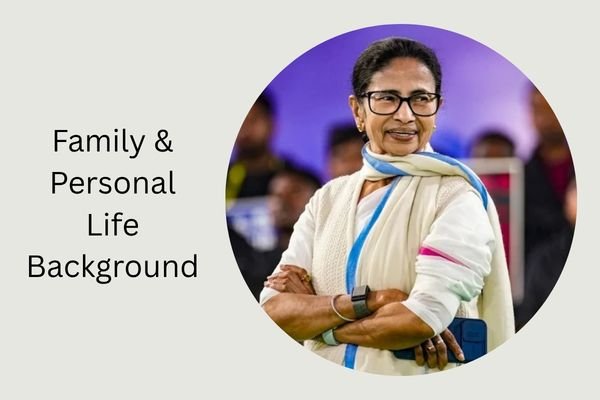
| Notable Relative | Abhishek Banerjee (nephew) — Member of Parliament and National General Secretary of the All India Trinamool Congress, widely seen as her political successor-in-waiting |
Reliable sources differ on the exact number of Mamata Banerjee’s siblings, so rather than repeat inconsistent figures, it’s worth simply noting she grew up in a large, financially modest household in Kolkata following her father’s early death — an experience she has often referenced as shaping her political outlook.
Personal Life Philosophy
Mamata Banerjee’s public life has long emphasized personal austerity as a political statement. She is frequently described in Indian media as declining an official chief ministerial salary, choosing instead to live off her book royalties, painting sales, and modest savings — a fact borne out by her election affidavits, which show no property, no vehicle, and no significant investments across successive elections.
Her decision to remain unmarried and to describe “the people of Bengal” as her family has been a recurring theme in how she presents her public identity, particularly during election campaigns where her personal modesty is often contrasted with wealthier political rivals.
Educational Journey
Schools & Early Education
| Level | Institution | Location | Notes |
|---|---|---|---|
| Early Schooling | Local schools in Kolkata | Kolkata, West Bengal | Grew up in a lower-middle-class household after her father’s death |
University Education
| Institution | Degree | Field | Notes |
|---|---|---|---|
| Jogamaya Devi College, University of Calcutta | Bachelor’s Degree | History | Active in student politics during this period |
| University of Calcutta | Master’s Degree | Education/Islamic History (reports vary on exact discipline) | Continued political activism alongside studies |
| Jogesh Chandra Chaudhuri Law College | Bachelor of Laws (LLB) | Law | Completed formal legal training |
Mamata Banerjee’s political career effectively began during her student years, when she became involved in Congress-affiliated student politics in Kolkata during the 1970s.
Career Timeline
| Year | Approx. Age | Position/Event | Key Detail |
|---|---|---|---|
| 1970s | Teens–20s | Student activist, Indian National Congress | Rose through Congress’s youth wing in West Bengal |
| 1984 | 29 | Member of Parliament, Lok Sabha (Jadavpur) | One of the youngest MPs elected that year |
| 1991–2011 (multiple terms) | 36–56 | Union Cabinet Minister | Held portfolios including Railways, Human Resource Development, Coal, and Youth Affairs & Sports across different governments |
| 1998 | 43 | Founder, All India Trinamool Congress | Broke away from Congress to form her own party |
| 2009–2011 | 54–56 | Union Minister for Railways | Second stint at Railways; oversaw major rail budget announcements |
| 2011 | 56 | Chief Minister of West Bengal | Ended 34 years of Left Front rule in the state |
| 2016, 2021 | 61, 66 | Re-elected Chief Minister | Won consecutive assembly majorities |
| 2026 | 71 | Contesting re-election from Bhabanipur | Filed fresh election affidavit disclosing current assets |
Early Political Career
- Entered Congress politics in Kolkata in the 1970s
- Won her first Lok Sabha seat (Jadavpur) in 1984, becoming one of India’s youngest MPs at the time
- Built a reputation as a grassroots organizer with strong direct engagement with voters
National Government Roles
- Served in multiple Union Cabinet portfolios over the 1990s–2000s, including two stints as Railway Minister
- Known during her Railway Ministry tenure for populist budget announcements and expansion of suburban rail services in West Bengal
Founding the Trinamool Congress and State Leadership
- Left the Congress party in 1997–98 over disagreements with state leadership and founded the All India Trinamool Congress
- Led a sustained opposition movement against the Left Front government, including prominent land-acquisition protests (Singur and Nandigram) that became central to her political rise
- Won the 2011 West Bengal Assembly election, ending the Left Front’s 34-year rule and becoming the state’s first female Chief Minister
- Has since won re-election in 2016 and 2021, and is contesting again in the 2026 Assembly election from the Bhabanipur constituency
Major Recognition & Public Profile
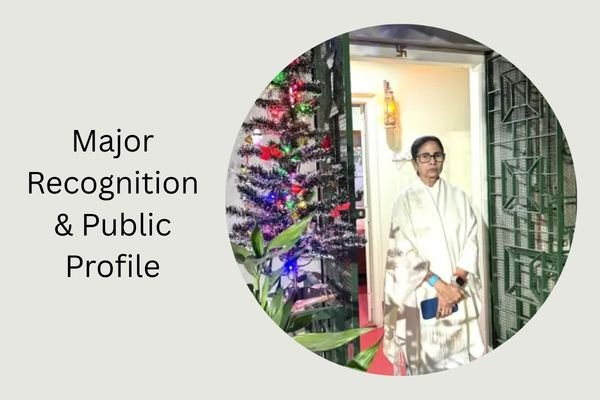
Rather than formal awards (which sitting political leaders in India generally do not receive while in office), Mamata Banerjee’s public recognition has largely come through international media rankings and political milestones:
| Recognition | Source/Context | Significance |
|---|---|---|
| Named among Time’s 100 Most Influential People | Time magazine | International recognition of her political influence |
| Repeated appearances on Forbes’ lists of powerful women | Forbes | Reflects her standing as a major regional and national political figure |
| First woman Chief Minister of West Bengal | State political history | A landmark in the state’s political history |
Net Worth Context: Assets vs. Income
Mamata Banerjee’s declared assets and income tell two different stories. Her total assets (₹15.4 lakh in 2026) are strikingly low for someone who has held ministerial and chief ministerial office for decades, while her annual income (₹23.21 lakh in FY2024–25, up from ₹20.72 lakh in FY2023–24) has actually been rising, driven mainly by royalties from her books and sales of her paintings, plus interest on bank deposits.
Because nearly all her disclosed wealth is liquid savings rather than property, business holdings, or investments, there isn’t a meaningful “net worth without charity” distinction to draw in her case, unlike wealthier public figures whose net worth estimates are sometimes adjusted for philanthropic giving — her affidavits show no shareholdings, bonds, insurance policies, house, or vehicle at all.
Financial Profile (2026 Affidavit)
| Category | Declared Value |
|---|---|
| Total Movable Assets | ₹15,37,509 (~₹15.4 lakh) |
| Bank Deposits | Approx. ₹12.7 lakh |
| Cash in Hand | ₹75,700 |
| Gold/Jewellery | 9.75 grams, valued around ₹1.45 lakh |
| Immovable Property | None declared |
| Vehicle | None declared |
| Liabilities | None declared |
| Annual Income (FY2024–25) | ₹23,21,570 |
| Annual Income (FY2023–24) | ₹20,72,740 |
| Peak Annual Income (FY2021–22) | ₹38,14,410 |
Administrative Positions & Leadership Roles
| Period | Position | Level |
|---|---|---|
| 1984–2011 (intermittent) | Member of Parliament, Lok Sabha | National |
| 1991, 1999–2000, 2009–2011 | Union Cabinet Minister (various portfolios) | National |
| 1998–present | Founder & Chairperson, All India Trinamool Congress | Party |
| 2011–present | Chief Minister of West Bengal | State |
Mamata Banerjee’s governance approach in West Bengal has centred heavily on welfare programmes — schemes like Kanyashree (support for girls’ education) and Lakshmir Bhandar (a direct cash-transfer scheme for women) have been central to her administration and to her continued electoral support, even as the state’s overall industrial growth has lagged behind some other major Indian states.
Recent Developments (2025–2026)
| Position | Organization | Status | Focus Area |
|---|---|---|---|
| Chief Minister | Government of West Bengal | Contesting re-election, 2026 | State governance, welfare schemes |
| Party Chairperson | All India Trinamool Congress | Active | Leading TMC’s 2026 election campaign |
| Candidate | Bhabanipur constituency | Contesting against BJP’s Suvendu Adhikari | 2026 West Bengal Assembly election |
Her 2026 affidavit shows total assets of roughly ₹15.4 lakh, down marginally from ₹16.72 lakh in her 2021 filing — a trend Indian media has repeatedly highlighted given how unusual it is for a long-serving state leader’s declared wealth to fall rather than rise.
Detailed Biography

Early Life: Mamata Banerjee was born on January 5, 1955, in Kolkata, into a modest Bengali family. Her father, a freedom fighter, died while she was young, and her mother raised the family largely alone — an upbringing Banerjee has often cited as the root of her connection to working-class and rural voters.
Education: She studied history at Jogamaya Devi College under the University of Calcutta, later adding further postgraduate study and a law degree from Jogesh Chandra Chaudhuri Law College, while remaining active in student politics throughout.
Career Milestones: From her first Lok Sabha win in 1984 through multiple Union Cabinet postings, the founding of the Trinamool Congress in 1998, and her landmark 2011 election victory that ended 34 years of Left Front rule, Banerjee’s career has been defined by sustained grassroots mobilisation rather than institutional or family political backing.
Landmark Moments: The Singur and Nandigram land-acquisition protests of the mid-2000s were pivotal in building the political momentum that eventually carried her to the Chief Minister’s office. Her tenure since has been shaped by large-scale welfare programmes alongside ongoing political battles with the BJP at the state and national level.
Recent Developments: Heading into the 2026 West Bengal Assembly election, she is contesting from Bhabanipur and continues to lead the TMC’s campaign amid a competitive contest with the BJP.
Lessons & Inspiration: Whatever one’s political view of her, Banerjee’s financial disclosures across three decades in public office consistently show a leader who has not converted political power into personal wealth in the way many of her peers have — a detail that has become part of her political brand as much as any policy.
Conclusion
Mamata Banerjee’s story is less about accumulated wealth and more about political endurance. Her declared net worth of roughly ₹15.4 lakh — modest by any standard for someone who has held national and state office for over three decades — sits in sharp contrast to her outsized political influence as one of India’s longest-serving and most closely watched regional leaders. Her real legacy, as reflected in her own public record, has been built on political longevity and welfare-driven governance rather than personal financial gain.
Frequently Asked Questions
What is Mamata Banerjee’s net worth in rupees as of 2026?
According to her 2026 election affidavit, Mamata Banerjee’s declared net worth is approximately ₹15.4 lakh (₹15,37,509).
Is there a separate “net worth without charity” figure for Mamata Banerjee?
No — her affidavits don’t report charitable giving separately, and since her assets are almost entirely bank deposits, cash, and a small amount of gold with no investments or property, there isn’t a meaningful charity-adjusted figure to calculate.
Is Mamata Banerjee married?
No, she has never married and has no children.
What is Mamata Banerjee’s current political position?
She is the sitting Chief Minister of West Bengal and is contesting re-election from the Bhabanipur constituency in the 2026 Assembly election.
What are Mamata Banerjee’s major political achievements?
Ending 34 years of Left Front rule in West Bengal in 2011, becoming the state’s first woman Chief Minister, founding the All India Trinamool Congress, and winning three consecutive assembly majorities.
How long has Mamata Banerjee led the Trinamool Congress?
She founded the party in 1998 and has led it continuously since.
What is Mamata Banerjee’s educational background?
She holds a bachelor’s degree in history from Jogamaya Devi College, a postgraduate degree from the University of Calcutta, and a law degree from Jogesh Chandra Chaudhuri Law College.
What are Mamata Banerjee’s hobbies and interests?
She is a published poet and an active painter; proceeds from her books and artwork form part of her declared annual income.
Does Mamata Banerjee own a house or car?
No — her affidavits consistently show no immovable property and no vehicle registered in her name.
What is Mamata Banerjee’s approach to personal wealth?
Her public financial disclosures show she does not draw her official Chief Minister’s salary and relies instead on royalties, art sales, and bank interest, resulting in one of the lowest declared net worths among sitting Indian chief ministers.
Disclaimer: Net worth and asset figures in this article are drawn from Mamata Banerjee’s publicly filed election affidavits and Indian media reporting on those filings, current as of her 2026 nomination. Affidavit disclosures reflect self-reported assets at the time of filing and may not capture every financial detail. Personal details such as exact physical description were not included where no verified public record exists, to avoid presenting invented information as fact.
